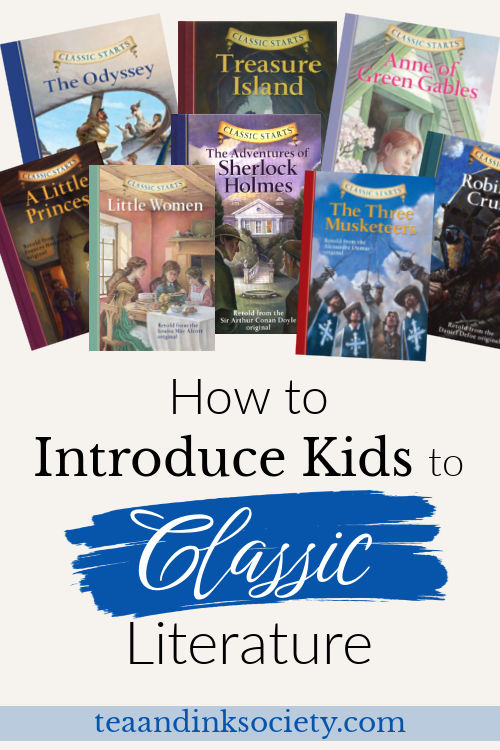
How to Introduce Kids to Classic Literature: A Teacher’s Recommendation
This post may contain affiliate links, including Amazon.com. Click here to read my affiliate policy.
Do you want to introduce kids to classic literature? Here is a school teacher’s recommendation for a beautiful series of books that unlocks the classics for young readers.
Guest post by Carrie Buhler
When I was a child I was terribly shy and it was very difficult for me to interact with people outside of my immediate family. My best friends had names like Tigger, Laura Ingalls, Joe and Frank Hardy, and Stuart Little. We had a tiny clubhouse in my bedroom closet, and we met each time I opened one of my books. Dr. Seuss said, “You can find magic wherever you look. Sit back and relax, all you need is a book,” and that is a truth which we all know and understand as lovers of books.
To this day, when I read a book, it’s like stepping through the wardrobe and finding myself in another world. I love books. I am drawn to books. I collect books. I lose myself in books.
I remember the day when I went to the public library near my home and I was gifted with my very own library card. I say gifted because that’s how it felt and it was amazing! I finally had something to put in my wallet. However, I also saw my library card as a responsibility for me to care for, protect and cherish each and every book I chose to check out. It made me feel as though I was a junior librarian.
Many of the books I read back then were historical fiction such as the famous orange books of The Childhood of Famous Americans Series, or the Little House On the Prairie series. With my library card in hand I would walk to the library each week, browse the children’s section, fill my bag and walk home with my treasures.
It is this love of reading that I wanted to share with my children, as my dad and my grandmom had shared with me, so from the time they were small we had story time each day and bedtime stories every night. I did voices and sound effects and my kids would join in.
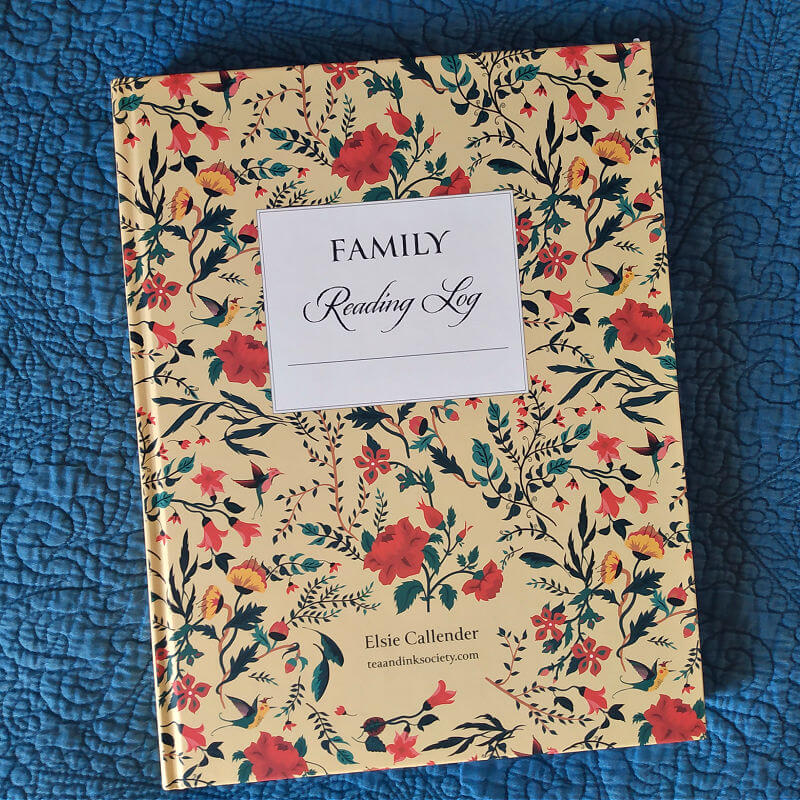
Note from Elsie: Recording the books you read aloud together as a family is a wonderful practice! My Family Reading Log Journal is the perfect way to keep track of your readalouds. Learn more here.
As my children grew older and less enthralled with Dr. Seuss, I struggled to find stories they were interested in. As much as they loved the Little House series and the Magic Treehouse series, there came a time when there seemed to be a gap between little kid books and junior high books. Having grown up in parochial schools with literature classes and summer book lists, I wanted to introduce my kids to those classic pieces of literature I knew and loved. But there was nothing.
Fast forward to my return to teaching years later and I found myself building my students a classroom library. The junior librarian persona of my childhood came racing back and I discovered just how much money it would take to wig out my husband buying books. Now, as much as I was enjoying looking at books on the Newberry lists and other awards I still wanted–no, needed–to introduce kids to The Classics.
How to Give Children an Easy Start in the Classics
Then I found it! A book series called Classic Starts published by Sterling Publishing Company, Inc. There are 55 classics in the series, each beautifully illustrated and abridged for a middle school reading level, and I bought every.single.one. I could finally introduce my students to Anne of Green Gables and Avonlea, Tom Sawyer and Huck Finn, Robinson Crusoe, Robin Hood and King Arthur. They could travel around the world in 80 days, journey to the center of the earth, solve mysteries in London or sail for treasure on the high seas. Badger, Ratty, Mole, Otter and Toad would have a new audience to befriend and enthrall. For Halloween reading they could choose from Dracula, Frankenstein, Dr. Jekyll and Mr. Hyde, and The Man in the Iron Mask.
I was in heaven! New doors, new friends and new worlds would open for kids for whom the world was TikTok and video games. They also get AR points for reading them if your school uses that reading program.
That was four years ago. I continue to enlarge my classroom library with genres such as award winners, historical fiction, fantasy and dystopian series. However, it is the Classic Starts bookshelves which see the most activity. I’ve been so pleased that even though the reading level and the language is for elementary and middle school aged children, Sterling Publishing remained true to the stories.
When my students get into high school and college literature classes they will be revisiting old friends and familiar places, and through reading the originals of the classic tales they will gain an even deeper understanding of the stories, the characters and the authors. Perhaps, when my former students become parents themselves, they will remember these books and pass them on to their children.
I cannot stop recommending this book series! Not only are they great for middle schoolers to read on their own, they would also be wonderful stories to read to children and grandchildren. In fact, I informed my husband that when I finally retire from teaching, this series will be coming home with me (along with other favorites from my classroom) to be added to my personal library. This way I ensure that as I get older I will continue to enjoy wonderful stories which I can share with my grandchildren.
I believe Classic literature continues to be relevant in this 21st century. It teaches us about other cultures and their values. We learn from different time periods and perspectives and in doing so learn about ourselves and the time we live in. I learned honor and courage from Robin Hood, Athos, Porthos and Aramis. Overcoming adversity and discovering your true self I learned from Buck (yes, I’m an animal lover). Children can learn understanding and empathy, how to defeat the dragons in their lives, the comfort and strength of true friendship and the power of redemption in these time-tested stories.
I’d like to leave you with a quote from Anne Lamott which I think we can all identify with: “For some of us, books are as important as almost anything else on earth. What a miracle it is that out of these small, flat, rigid squares of paper unfolds world after world, worlds that sing to you, comfort or quiet or excite you. Books to help us understand who we are and how we are to behave. They show us what community and friendship mean; they show us how to live and die.”
In this age of everything digital in which right and wrong is relative, these are the lessons our children can learn and need to learn.
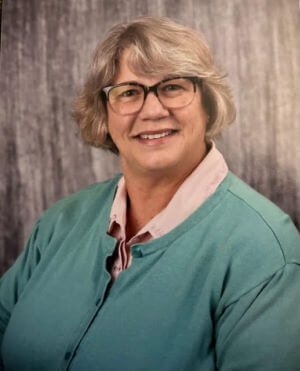
About the author
Carrie is a middle school history teacher by trade, and a reader by passion. She loves books and wants to pass on that love to her students and anyone who is open to it. She and her husband of 25 years have 2 kids and live on a farm in northwest Kansas.
More blog posts on getting kids to read (especially classics!):
- 50 Classic Chapter Books for Kids
- Beautiful Read-Aloud Book Editions
- Wishbone Episode Guide (a GREAT 90s TV show for introducing kids to the classics!)
- Lesser-Known Fantasy Novels for Children and Teens
- Young Adult Fantasy Series
- 25+ Classic Fairy Tale Collections for Your Home Library
- Books Like Anne of Green Gables

Thanks, this was really helpful and interesting!
Yes, I loved Carrie’s recommendations and the glimpse into her reading life!
Sorry, but I just DON’T agree. Before I say why, let me give my alternative:
First of all, Bedtime Stories. Even books that are very hard to read to oneself can make delightful, much anticipated bedtime stories.
Secondly, just because something is a classic, doesn’t mean that it isn’t good for children just the way it is. Pollyanna, Just David, Jane of Lantern Hill, A Little Princess, The Peterkin Papers, Beatrix Potter’s books, and The Chronicles of Narnia are wonderful examples…unless you think children must be sheltered from the slightest reading or vocabulary challege until they are twelve or thirteen years old, at which point they are supposed to magically become good readers! I know of a nine year old who zipped through Anne of Green Gables – and Anne is a lot harder than Pollyanna!
There’s a term for simplified versions of a good story’s whole plot: spoilers! I was sadly spoiled for The Secret Garden by watching and rewatching a somewhat faithful movie adaptation of it. The book would have been as delightful to me as to so many other people if I wasn’t already well aquainted with the plot. It must have been great to actually wonder what happened next as you read it. For me, the book was rather dull. On the other hand, between Sullivan and Netflix I was more hyped than spoiled for Anne of Green Gables, but Anne’s indestructible. I can’t stand that ugly depiction of her and Green Gables on the cover of Classic Starts, though. It makes me cringe.
The first step on the road to children enjoying great literature is getting them to enjoy reading. In order to do that, you have to find an unillustrated book on a subject that facinates them. It might take a little sensational violence in the first pages to get them hooked, but one they love to read, they’ll love Anne of Green Gables. From there, (assuming it’s a girl) you go Jane Austen, Eleanor H. Porter (seriously, you have to explore her works beyond Pollyanna, she wrote many wonders), and Thomas Love Peacock. Then comes Jane Eyre, followed by Little Women, followed by Tom Jones by Henry Fielding. And of course, there are numerous more delights at every stage. Your children will find some of them following the classic literature rabbit hole.
Much love to everyone, and as to the author of this article…
I admire your desire for children to know and love classic literature, even if I don’t think you’re going about it the right way. And once they’ve given the original a try, I agree that boring Ivanhoe can be read in an abriged form, just don’t say it is “by” Sir Walter Scott – the children’s versions of Ivanhoe are “based on a book by” Sir Walter Scott. LOL!
I love your thoughts and agree with a lot of your points! We should definitely read aloud to kids to get them hearing books they couldn’t yet tackle on their own, and that’s an important foundational step to creating good readers. I disagree about the unillustrated part, though. I actively seek out classics with pictures (that I deem a good pictorial representation of the book) because that’s another aid in helping kids to assimilate books that are “above” their level. For instance, right now we’re reading Paul Bunyan Swings His Axe, and the line drawings really help the kids picture the fantastical tall tales and the absurdity of the narration. And looking back on my own childhood, the books that my parents read that included pictures are the ones I remember best.
As far as an abridged book or a movie spoiling the original, I feel like that’s more a matter of opinion combined with the *type* of story you’re dealing with. The Secret Garden has a lot more mysterious elements, so watching the movie spoiled the gradual revelations you would’ve gotten by reading the book first. But Anne is more episodic.
I get what you’re saying about kids not always “needing” abridgements. For my part, all the abridgements I recall reading in my childhood, I went on to read the full versions later (sometimes years later) because I was intrigued by the story. But I’m sure there’s some kids who would think they already “knew” the story and could skip the full, rich experience of the original.
What occurs to me with Carrie’s perspective is that as a teacher, she might not be able to have as much control or time as a parent would in fostering her students’ reading lives. What she *can* do is make these nicely-packaged (except for the Anne book, haha!), un-intimidating versions readily available to her students, and hopefully plant those seeds for future classic reading when they leave her classroom.
I know what you mean about the illustrations, and I love good illustrations contemporary with the book to give an accurate idea of what these things looked like in a different time. I just meant that while I was “reading” books with illustrations, I wasn’t “reading” at all. I didn’t have the motivation. It took a book that had only the most minimal illustrations and which no adult was actually interested in reading to me to get me to read.
Have you seen Sea Wolf Press’s editions of Louisa May Alcott’s books? They have gorgeous contemporary illustrations.
Yes, I love what SeaWolf Press has been doing to get the early illustrations back in to various classics!